
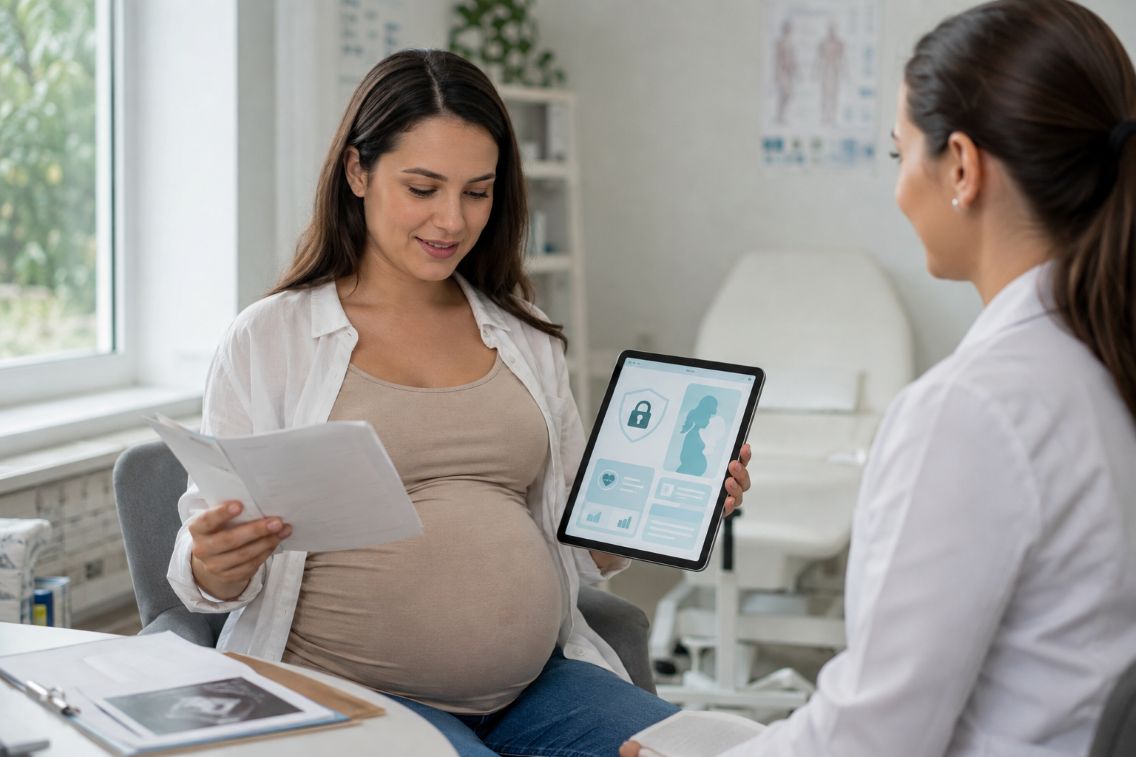
Prenatal records help healthcare professionals follow a pregnancy over time, identify possible risks, coordinate tests, and plan appropriate care. The World Health Organization recommends home-based maternal records as a complement to information held by clinics and hospitals, particularly when patients receive care from several providers.
Parents may also want a separate place for personal reflections, questions, photographs, and milestones. Those considering a pregnancy keepsake journal to compare formats and features, read the full guide on PregnancyWeekByWeek. This type of journal serves a personal purpose and should remain separate from formal medical documentation.
How Prenatal Records Support Care Across Countries
Pregnancy tracking systems differ because healthcare services, infrastructure, funding, and access to technology vary between countries. Some systems give pregnant women paper records to carry between appointments. Others store most information electronically and offer patients access through secure websites or mobile applications.
Despite these differences, the central purpose is similar. Records give clinicians a continuing picture of maternal and fetal health. They may include medical history, blood pressure readings, test results, medications, screening outcomes, ultrasound findings, appointment dates, and care plans. Complete information becomes especially important when a patient changes clinics or requires urgent treatment.
The World Health Organization has found that home-based records can support communication between families and health workers. However, their usefulness depends on consistent availability, good design, proper explanation, and regular use by professionals. Record shortages, incomplete entries, or documents that families cannot easily understand may reduce their value.
Paper Documentation Versus Digital Tracking
Paper pregnancy records remain practical in places where internet access, electricity, or electronic health infrastructure is unreliable. They are portable, require no password, and can be reviewed immediately during an appointment. Patients may also find handwritten notes easier to show to a new provider without navigating a digital system.
Paper has clear limitations. A booklet can be damaged, forgotten, or lost. Handwriting may be difficult to interpret, and information sometimes needs to be copied into separate hospital systems. Updates made by one provider may not reach another promptly.
Digital tools address some of these problems by allowing authorized professionals to update a shared record. For example, Oxford University Hospitals NHS Foundation Trust uses BadgerNotes, which lets patients view maternity information through a phone, tablet, or computer. Such systems can provide current appointment details and care plans while reducing dependence on a physical folder.
Digital records introduce different concerns. Patients need suitable devices, connectivity, and confidence using online services. Healthcare organizations must protect sensitive information through secure authentication, access controls, and responsible data management. A technical failure may also make information temporarily unavailable, so contingency procedures remain necessary.
Pregnancy Monitoring in China and Other Modern Systems
China illustrates how maternal healthcare can combine large clinical networks with expanding digital services. A 2025 white paper published by the State Council Information Office of China describes an “internet plus maternal and child healthcare” model. It reports that 31 provincial-level cloud platforms support telemedicine, professional guidance, and care for pregnant and postpartum patients with serious conditions.
This approach reflects a broader trend toward connecting community services, specialist hospitals, and remote consultation systems. Digital pregnancy monitoring also sits within a wider reproductive health environment that includes contraception, STI prevention, and public education. A related discussion of reproductive health education in China illustrates how access to clear information can support informed health decisions. Technology may improve coordination, but it does not remove differences in local staffing, resources, digital literacy, or access to specialist care.
Similar transitions are visible elsewhere. Some National Health Service trusts in the United Kingdom have replaced handheld maternity folders with patient-accessible electronic records. Meanwhile, evaluations commissioned by the Australian Government Department of Health and Aged Care have considered digital pregnancy records and digital child health books as potential ways to follow outcomes across connected stages of care.
Where Personal Journaling Fits
A personal pregnancy journal can sit alongside either paper or electronic medical records. Parents might use it to record emotions, family experiences, questions for upcoming appointments, and memories such as hearing a fetal heartbeat for the first time. It can also help someone notice patterns they may wish to discuss with a midwife or doctor.
However, personal notes are not a substitute for professional records or clinical assessment. Symptoms entered in a private journal are not automatically monitored by healthcare staff. Urgent concerns should be reported directly through the channels recommended by the patient’s maternity team rather than saved for a later journal entry.
A More Connected Future
Future maternal health systems are likely to connect patient portals, hospital records, remote consultations, wearable devices, and personal documentation more closely. The strongest models will still need clear consent, reliable security, accessible design, and alternatives for people who cannot use digital tools.
Paper records offer simplicity and independence from technology, while digital systems support faster updating and wider clinical coordination. Personal journals add an emotional and practical layer that neither format is designed to provide. Used together, with clear boundaries between memories and medical information, these approaches can help families stay engaged while leaving healthcare decisions in professional hands.